Core Web Vitals
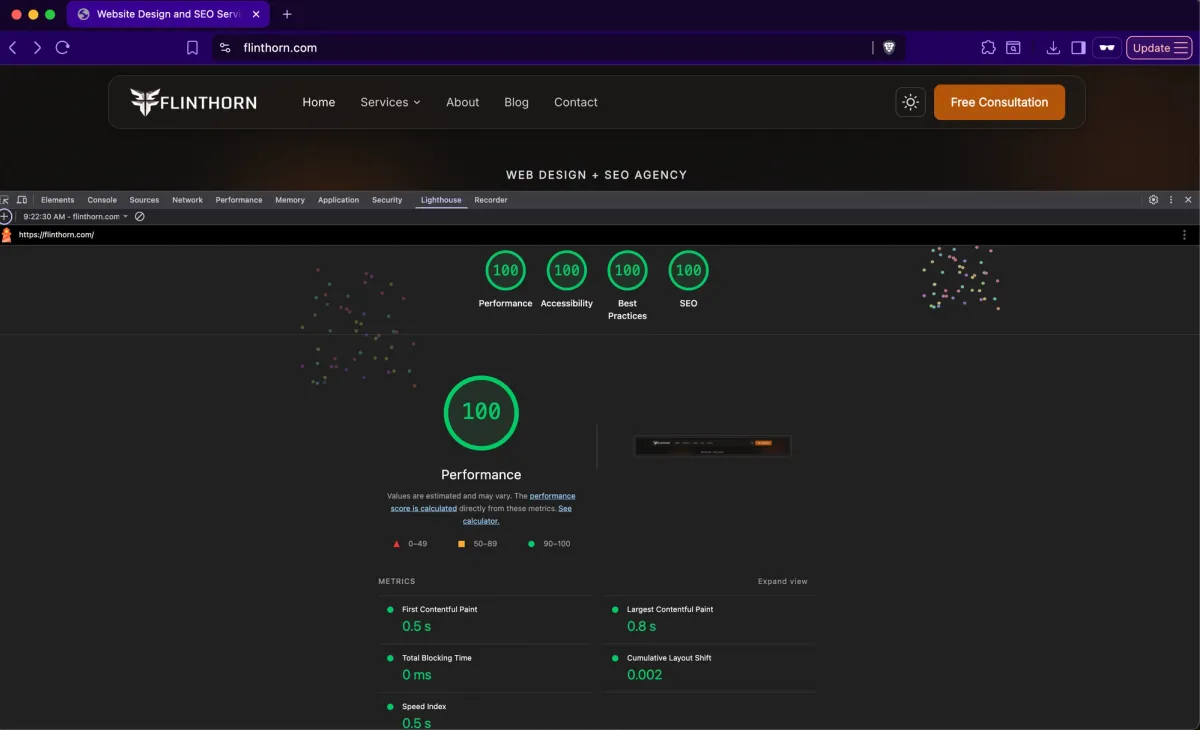
LCP, CLS, and INP measured and optimized — the performance metrics Google uses as ranking signals. We benchmark before and after every engagement.
Technical SEO Services
Most ranking problems aren’t content problems — they’re technical problems. Crawl errors, slow pages, broken structured data, canonicalization issues, indexing gaps. FlintHorn finds them, explains them clearly, and fixes them. Whether you need a one-time audit or ongoing technical SEO support, we cover both.
Performance as a baseline
Every project, no exceptions
We fix what we find
We watch what happens after launch
A technical SEO audit isn’t one thing — it’s a systematic review of every factor that affects how search engines crawl, index, and rank your site.
LCP, CLS, and INP measured and optimized — the performance metrics Google uses as ranking signals. We benchmark before and after every engagement.
We verify Google can access and index your important pages — and that it isn’t wasting crawl budget on pages that shouldn’t be indexed.
JSON-LD implementation for Organization, Article, FAQ, Product, Service, and BreadcrumbList — verified with Google’s Rich Results Test.
Canonical tag audit, duplicate content identification, and parameter handling — so Google knows exactly which version of each page to rank.
Redirect chain identification and resolution, 404 mapping, and redirect logic review — especially critical after migrations and redesigns.
Sitemap coverage verification, robots.txt audit, and crawl directive review — making sure you’re not accidentally blocking pages you need indexed.
Mobile usability audit, page speed analysis, and image optimization — Google indexes the mobile version of your site first.
Title tags, meta descriptions, heading hierarchy, internal linking architecture, and keyword-to-page mapping across your most important pages.
Whether your site is already built or still on the drawing board, technical SEO belongs in the process.
You’ve got content. You’ve got backlinks. But the rankings aren’t moving — or they dropped after a redesign, a migration, or a major update. In most cases, the problem is technical. Crawl errors that prevent Google from accessing key pages. Duplicate content confusing the indexer. Structured data that was never implemented correctly. Page speed scores that are tanking your Core Web Vitals. A technical SEO audit finds the specific issues holding your site back and gives you a prioritized fix list — not a generic checklist, but a diagnosis of your actual site.

The best time to handle technical SEO is during the build, not after. URL structure, heading hierarchy, structured data, canonical configuration, sitemap setup, robots.txt — these decisions are far cheaper to make correctly the first time than to fix retroactively. Every site FlintHorn builds includes a pre-launch technical SEO review as a standard part of the process. You don’t get a site and then get a list of SEO problems to fix. You get a site where the SEO foundation is already in place.

Google updates its algorithms. Your site adds new pages. Content gets moved or consolidated. A redesign introduces new technical debt. Technical SEO issues that weren’t there six months ago can appear after any of these events — and they compound if they’re not caught early. Our ongoing technical SEO retainer covers monthly monitoring in Google Search Console, crawl error resolution, structured data maintenance, and quarterly full audits so nothing slips through unnoticed.
Whether you’re getting a one-time audit or starting an ongoing engagement, it begins the same way.
We crawl your site with Screaming Frog alongside a Google Search Console and Google Analytics review. We document your current indexed pages, crawl errors, coverage issues, Core Web Vitals baseline, and any existing structured data. This gives us a complete technical picture before any recommendations are made.
We categorize every technical issue by impact — Critical (directly harming rankings or indexing), Important (limiting ranking potential), and Advisory (best practice improvements). You get a clear priority order, not a 200-item checklist with no guidance on where to start.
A written report covering every issue found, what it means in plain language, the recommended fix, and the expected impact. The report is organized by priority and includes screenshots and Search Console data to support every finding. Designed to be acted on immediately — not filed away.
We can implement the fixes ourselves or hand off the report to your development team. For sites we built, remediation is typically fast — we know the codebase. For third-party sites, we provide fix-ready instructions that any competent developer can follow.
After fixes are implemented, we verify in Google Search Console that issues are resolved and monitor for any new issues surfacing. For ongoing retainer clients, this monitoring is continuous. For one-time audit clients, we offer a 30-day post-fix check-in.
| Feature | FlintHorn | Typical SEO Audit |
|---|---|---|
| Issues prioritized by actual ranking impact | ✓ | – |
| Core Web Vitals benchmarked and optimized | ✓ | – |
| Structured data verified with Rich Results Test | ✓ | ✗ |
| Google Search Console data used in diagnosis | ✓ | – |
| Plain language explanations alongside technical findings | ✓ | ✗ |
| Remediation available — not just a report | ✓ | ✗ |
| Post-fix verification included | ✓ | ✗ |
| Ongoing monitoring available after audit | ✓ | ✗ |
“We had been struggling with rankings for months and could not figure out why. FlintHorn ran a technical SEO audit and found crawl issues, duplicate canonicals, and broken structured data we had no idea existed. Within weeks of fixing them, our traffic started recovering.”
“The audit report was the most actionable document we have received from any agency. Every issue was prioritized by impact, explained in plain language, and came with a specific fix. No fluff, no filler — just a clear path to better rankings.”
Technical SEO covers the infrastructure of your website — how search engines crawl it, index it, and understand its content. It includes page speed, crawlability, structured data, canonical tags, redirect health, mobile usability, and more. It matters because even the best content won’t rank if Google can’t properly access, index, and interpret your pages. Most ranking problems that can’t be explained by content or backlinks have a technical root cause.
A general SEO audit often covers content, backlinks, and keyword strategy alongside technical factors. A technical SEO audit focuses specifically on the infrastructure — the factors that affect how search engines interact with your site’s code and architecture. We start every engagement with technical SEO because it’s the foundation everything else builds on. There’s no point optimizing content on a site Google can’t crawl correctly.
For most business websites (20–100 pages), a thorough technical audit takes 5–7 business days from access to report delivery. Larger, more complex sites take longer. We’ll scope the timeline after an initial review of your site.
Both options are available. We can deliver the audit report and hand it to your development team with fix-ready instructions, or we can implement the fixes ourselves. For sites we built on our stack, remediation is typically fast. For third-party sites, we’ll give you an honest estimate of the remediation effort before you commit.
Yes — this is one of the most common situations we deal with. Post-redesign ranking drops are almost always technical: missed redirects, changed URL structures, lost metadata, broken canonical tags, or structural data that didn’t carry over. A targeted technical audit after a redesign identifies exactly what changed and what needs to be fixed. See our website redesign service for how we prevent this from happening in the first place.
Yes. Our ongoing technical SEO retainer covers monthly Google Search Console monitoring, crawl error resolution, structured data maintenance, Core Web Vitals tracking, and quarterly full audits. It’s designed for sites that want technical SEO handled proactively rather than reactively. We’ll recommend whether a one-time audit or ongoing support makes more sense after the initial review.
Guides on technical SEO, Core Web Vitals, and what’s actually affecting your rankings.
A perfect Lighthouse score isn't a vanity metric. It's a direct signal to Google that your site loads fast, works for everyone, follows best practices, and is built for search. Here's what it takes to get there — and what it means for your rankings and conversions.
Migrating off Drupal — whether to WordPress, a headless CMS, or another platform — requires careful planning to protect your content, functionality, and SEO rankings.
Is migrating from Drupal to WordPress worth it? Here’s an honest look at the benefits, the trade-offs, and how to know if it’s the right move for your organization.